How Better Balance Transforms Your Health Before Problems Start
You don’t notice your balance until you lose it—but by then, the damage may already be done. Poor balance isn’t just about wobbling on one foot; it’s a hidden warning sign linked to long-term health risks, from everyday injuries to declining mobility. I didn’t think about it until I stumbled more than once. Turns out, improving balance isn’t just for athletes or older adults. It’s a smart, science-backed way to protect your body before problems arise. Balance is not merely about staying upright—it reflects the harmony between your brain, muscles, nerves, and senses. When this system falters, even simple tasks become harder, and the risk of injury increases. The good news? Balance can be improved at any age, often with small, consistent changes that fit into daily life. This article explores why balance matters, how it connects to long-term health, and what you can do—starting today—to strengthen your stability and safeguard your future well-being.
The Silent Signal: Why Balance Matters More Than You Think
Beyond strength and endurance, balance is a cornerstone of physical function, yet it often goes unnoticed until something goes wrong. It is not just about walking steadily or standing on one leg—it is a complex, continuous process that involves constant communication between your nervous system and your muscles. Every time you move, your brain receives signals from your inner ear, eyes, and sensory nerves in your joints and muscles to determine your body’s position in space. When these signals are clear and coordinated, you move with confidence. But when one or more systems falter, even slightly, your body compensates—often without you realizing it—until the moment you misstep on a curb or feel a sudden lurch while turning.
Balance is especially critical as we age, but it is not solely an issue for older adults. According to data from the Centers for Disease Control and Prevention (CDC), millions of people of all ages experience fall-related injuries each year, many of which stem from undetected balance issues. While falls are a leading cause of injury among adults over 65, younger individuals are not immune—especially those with sedentary lifestyles, past injuries, or underlying health conditions that affect coordination. What many fail to recognize is that balance decline is often gradual. It sneaks in through small changes: leaning more on counters while cooking, hesitating before stepping off a curb, or needing to steady yourself after standing up too quickly. These moments are not just minor inconveniences—they are early indicators that your body’s stability system may need attention.
Ignoring these subtle signs can have long-term consequences. Poor balance increases the risk of falls, which can lead to fractures, hospitalization, and loss of independence. But beyond the immediate danger of injury, declining balance often signals a broader decline in physical function. It can limit your ability to stay active, which in turn affects cardiovascular health, muscle strength, and joint flexibility. The ripple effect is real: reduced activity leads to weaker muscles, which further impairs balance, creating a cycle that becomes harder to break over time. Recognizing balance as a vital sign of overall health—much like blood pressure or heart rate—can shift how you approach your daily movement and long-term wellness.
Balance and Disease Prevention: Connecting the Dots
While balance is often discussed in the context of injury prevention, its role in broader disease prevention is equally important, though less widely recognized. A strong, stable body supports consistent physical activity, and activity is a key defense against many chronic conditions. When balance is compromised, people tend to move less—not out of choice, but out of caution. This reduction in movement can quietly contribute to the development of serious health issues over time. For example, reduced physical activity is a well-documented risk factor for type 2 diabetes, as it affects insulin sensitivity and glucose metabolism. Similarly, a sedentary lifestyle increases the risk of cardiovascular disease by contributing to high blood pressure, elevated cholesterol levels, and weight gain.
By maintaining good balance, you enable yourself to stay active with greater confidence. Whether it’s walking the dog, gardening, or taking the stairs instead of the elevator, these everyday movements add up. They keep your heart strong, your joints flexible, and your metabolism functioning efficiently. Balance training, even in small doses, encourages neuromuscular coordination—the brain’s ability to communicate effectively with muscles—which supports overall physical resilience. This kind of resilience helps you remain mobile and independent as you age, reducing the likelihood of developing conditions tied to inactivity.
Additionally, good balance supports musculoskeletal health. When your body moves efficiently, there is less strain on joints and tendons. Poor balance often leads to awkward movements or compensatory postures, which can increase wear and tear on the knees, hips, and lower back. Over time, this can contribute to chronic pain or degenerative joint conditions. By improving your stability, you reduce the risk of these issues and promote more natural, fluid movement. In this way, balance is not just about avoiding falls—it is about preserving your body’s ability to function well for years to come. It is a proactive form of self-care, one that pays dividends in long-term health and quality of life.
What Weak Balance Actually Feels Like (And When to Notice)
Declining balance does not always announce itself with dramatic stumbles or falls. More often, it reveals itself through subtle, everyday sensations that are easy to dismiss. You might notice that you instinctively reach for the handrail when going up or down stairs, even if the steps are even and dry. You may feel a slight wobble when standing on one foot to put on pants or when turning quickly to answer the phone. These moments may seem minor, but they are clues that your body is working harder than it should to stay upright. Another common sign is feeling unsteady in low-light environments, such as a dimly lit hallway or a parking garage at night, where visual cues are limited and your other balance systems must work overtime.
Some people report a sensation of “floating” or mild dizziness when standing up, especially after sitting for a long time. While occasional lightheadedness can be normal, frequent or persistent episodes may indicate that your body is struggling to regulate blood pressure or that your vestibular system—responsible for spatial orientation—is not functioning optimally. Others notice that they rely more on support when rising from a chair, pushing off with their hands instead of using their leg strength. This shift in movement pattern can signal weakening muscles or reduced proprioception—the body’s ability to sense where its limbs are in space.
It is important to distinguish between normal, occasional imbalance and consistent, recurring issues. Everyone loses their footing now and then, especially when distracted or tired. But if you find yourself adjusting your movements frequently to avoid feeling unsteady, it may be time to pay closer attention. Other warning signs include difficulty walking in a straight line, especially heel-to-toe, or feeling off-balance when standing with your eyes closed. These simple tests can help you assess your stability. The key is not to panic but to recognize that balance, like any other physical skill, can be improved with awareness and practice. Early recognition allows for early intervention, which can prevent more serious issues down the road.
The Science of Stability: How Your Body Stays Upright
Staying upright is a remarkable feat of biological engineering, made possible by the seamless integration of three primary systems: the vestibular system in the inner ear, the visual system, and proprioception. Together, these systems form a dynamic network that continuously monitors and adjusts your body’s position. The vestibular system acts like a built-in level tool, detecting motion and head position through tiny fluid-filled canals and sensory cells in the inner ear. When you tilt your head or move, the fluid shifts, sending signals to your brain about your orientation in space. This system is crucial for maintaining equilibrium, especially when your eyes are closed or in dark environments.
The visual system provides another critical input. Your eyes help you orient yourself by tracking your surroundings. When you walk down a hallway, your brain uses visual cues—like the edges of walls or the pattern on the floor—to judge distance and movement. This visual feedback works in tandem with the vestibular system to keep you stable. However, if your vision is impaired or if you are in a visually confusing environment—such as a crowded room with moving people—your brain may receive conflicting signals, making balance more challenging.
Proprioception, often called the “sixth sense,” refers to your body’s ability to sense movement, action, and location without looking. Specialized nerve endings in your muscles, tendons, and joints send constant updates to your brain about limb position and muscle tension. For example, even with your eyes closed, you know whether your foot is flat on the ground or on its toes. This sense allows for smooth, coordinated movement and is essential for balance, especially on uneven surfaces. When one of these three systems is impaired—due to aging, inactivity, or minor injury—the others must compensate. Over time, this compensation can lead to fatigue, reduced performance, and increased risk of imbalance. The good news is that all three systems can be strengthened through targeted exercises and mindful movement.
Everyday Moves That Build Real Balance (No Gym Needed)
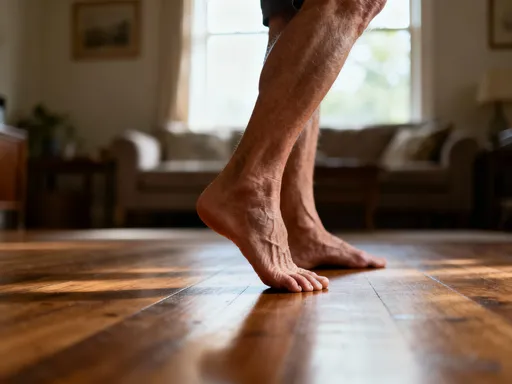
The best part about improving balance is that it does not require special equipment, a gym membership, or hours of training. Simple, evidence-based exercises can be done at home, during daily routines, and in just a few minutes a day. One of the most effective and accessible exercises is the single-leg stand. To perform it, stand near a sturdy surface like a countertop or chair back for support. Lift one foot off the ground and balance on the other leg for 20 to 30 seconds. Switch sides and repeat. As your stability improves, try letting go of the support or increasing the duration. This exercise strengthens the muscles in your legs and feet while enhancing neuromuscular coordination.
Another powerful yet simple movement is the heel-to-toe walk. Walk in a straight line, placing the heel of one foot directly in front of the toes of the other, as if walking on a tightrope. Take 10 to 20 steps, focusing on maintaining a steady pace and upright posture. This exercise challenges your balance by narrowing your base of support and improving your ability to walk with precision. It also enhances proprioception and coordination, both of which are essential for preventing falls.
Slow weight shifts are another effective practice. Stand with your feet shoulder-width apart and slowly shift your weight to one side, lifting the opposite foot slightly off the ground. Hold for a few seconds, then shift to the other side. This movement helps train your body to adjust its center of gravity smoothly and safely. For added challenge, try doing these exercises with your eyes closed, which reduces reliance on vision and forces your vestibular and proprioceptive systems to work harder.
These exercises are safe for most people, but it is important to prioritize safety. Always perform them near a wall or stable surface, remove tripping hazards like rugs or clutter, and wear supportive footwear. Start slowly and build up gradually—consistency is more important than intensity. Even two to three minutes a day can lead to noticeable improvements in balance within a few weeks. The key is to make these movements a regular part of your routine, not a one-time effort.
Making Balance Part of Your Routine: Habits That Stick
One of the biggest challenges in improving balance is making it a consistent habit. Like any health behavior, motivation often fades if the practice feels like a chore or requires too much effort. The solution lies in integrating balance training into activities you already do every day. This strategy, known as habit stacking, leverages existing routines to build new behaviors. For example, you can practice standing on one leg while brushing your teeth. Since most people brush for two minutes, this creates a built-in time block for balance practice without adding extra time to your day. Over time, this small action becomes automatic.
Other opportunities include standing on one foot while waiting for the kettle to boil, doing slow weight shifts while folding laundry, or walking heel-to-toe down a hallway during a break. These micro-moments of practice add up and reinforce neural pathways that support stability. The goal is not perfection but repetition—each time you challenge your balance, you are training your brain and body to work together more efficiently.
Tracking progress can also boost motivation. You don’t need a fitness tracker or app—simply note how long you can stand on one leg without support or how steadily you can walk heel-to-toe. Over time, you may notice that you can hold the position longer or move with greater confidence. Celebrating these small wins reinforces the habit and makes the effort feel worthwhile. The more you weave balance into your daily life, the more natural and effortless it becomes. It shifts from being something you “do” to something you simply “are”—a person who moves with greater awareness and control.
When to Seek Help: Knowing the Limits
While most people can improve their balance through regular practice, there are times when professional guidance is necessary. Certain symptoms should not be ignored, as they may indicate underlying medical conditions that require evaluation. Frequent dizziness, especially when accompanied by nausea or blurred vision, could be a sign of inner ear disorders such as benign paroxysmal positional vertigo (BPPV) or vestibular neuritis. Sudden loss of coordination, difficulty walking, or unexplained falls—particularly if they occur without an obvious cause—should also prompt a visit to a healthcare provider.
Neurological conditions, such as Parkinson’s disease or multiple sclerosis, can affect balance, as can certain medications that impact the central nervous system. If you have a history of head injury, stroke, or chronic health conditions like diabetes—which can cause nerve damage—your risk of balance issues may be higher. In these cases, working with a physical therapist or vestibular rehabilitation specialist can provide targeted, safe interventions. These professionals can assess your specific needs, design a personalized exercise program, and help you progress safely.
It is important to remember that self-care and medical care are not mutually exclusive. Practicing balance exercises at home is a valuable form of prevention and maintenance, but it does not replace professional evaluation when symptoms are persistent or severe. Your healthcare provider can rule out serious conditions, recommend appropriate treatments, and guide you toward the right resources. Taking this step is not a sign of weakness—it is an act of wisdom and self-respect.
Stability as a Lifelong Investment
Better balance is not a trend or a temporary fix—it is a lifelong investment in your health and independence. It is easy to overlook until a stumble or fall forces attention, but the benefits of stability extend far beyond avoiding accidents. Strong balance supports mobility, enhances confidence, and enables you to stay active and engaged in life. It protects not just your body, but your freedom to move, explore, and care for yourself and your loved ones.
The truth is, balance is not something you either have or don’t have—it is a skill that can be developed at any age. With small, consistent efforts, you can strengthen the systems that keep you steady and reduce your risk of injury and disease. The exercises are simple, the time commitment is minimal, and the rewards are lasting. By making balance a priority today, you are not just preventing problems—you are building a foundation for a healthier, more resilient future. Stability is not just about staying upright. It is about standing strong, for years to come.